
Factory-direct from Lahore · Nationwide delivery in 2–4 days
+92 319 4262451
WhatsApp
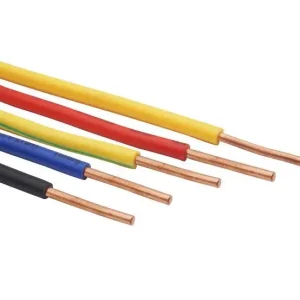
One solid copper conductor of 2.5 mm² — 1.78 mm across, since a round conductor of that area works out at √(4 × 2.5 ÷ π) = 1.78 mm. PVC insulated to 450/750 V, class 1 to IEC 60228, 7.41 Ω/km at 20°C. This is the wire drawn into conduit for socket and appliance circuits in a new house, the wire panel builders use inside distribution boards, and the wire for earth and bonding runs, because a solid conductor sits under a terminal screw without spreading. The market orders the size as 7/.029, though that code describes the stranded build; this one is solid. Drawn on the Pilone line in Lahore.
Prices track the daily copper rate. Coil and bulk pricing on request.
Check the coil before you pay for it
Every coil leaves our factory with a QR code printed on the packaging. Scan it and the factory record for that batch opens: brand, cable size, batch number, year of manufacture and conductor. Compare the batch number on screen with the one printed on your coil — if the two do not match, it did not come from us.
| Property | Value |
|---|---|
| Conductor | Plain annealed copper, class 1 solid |
| Nominal area | 2.5 mm² × 1 core |
| Construction | Solid round conductor (no stranding) |
| Max conductor resistance at 20°C | 7.41 Ω/km |
| Current capacity | Depends on installation — see note above |
| Voltage drop | 18 mV/A/m (reference, stranded equivalent) |
| Voltage rating | 450/750 V |
| Insulation | PVC, 70°C conductor rating |
| Conductor copper weight | ≈ 22.2 kg/km (single conductor) |
| Reference standards | IEC 60228 (conductors), IEC 60227 (PVC cables) |
Voltage drop for this size is 18 mV per amp per metre. A circuit carrying 16 A over a 20 m conduit run drops 16 × 20 × 18 ÷ 1000 = 5.8 V — 2.6% of 220 V, inside the 5% BS 7671 allows on a power circuit, which is 11 V here. Whether that circuit may draw 16 A on this wire is a separate question: a single conductor's rating depends on how many other circuits share the conduit and how hot the space gets, which is why the table above publishes resistance rather than one amp figure.
Live, neutral and earth pulled separately into PVC conduit — the standard method in Pakistani new-build, with 2.5 mm² on sockets and 1.5 mm² on lights.
Inside DBs, switch boxes and control panels, where a solid conductor holds its bend and will not fray under a screw terminal.
Continuity and bonding conductors to panels and metalwork, fixed once and never moved again.
Who buys this wire: house wiring contractors taking coils for a new build or a rewire, and panel shops taking short lengths for internal wiring. The circuit is a fixed one inside conduit or trunking — 2.5 mm² is the usual size for socket and appliance points, with 1.5 mm² kept for lighting. What it is not for is anything that moves: a solid conductor work-hardens and finally breaks at the flex point, so appliance leads and portable equipment take the class 5 build in 2.5mm 2 core flexible cable instead. One size down in the same solid wire is 1.5mm single core solid cable.
“Excellent quality copper cables. Fast delivery across Pakistan. Highly recommended for electrical projects.”
“Best cable manufacturer in Lahore. 99.9% pure copper as promised. Very satisfied with the product quality.”
“Good quality cables at competitive prices. Delivery was quick to Karachi. Will order again.”