
Factory-direct from Lahore · Nationwide delivery in 2–4 days
+92 319 4262451
WhatsApp
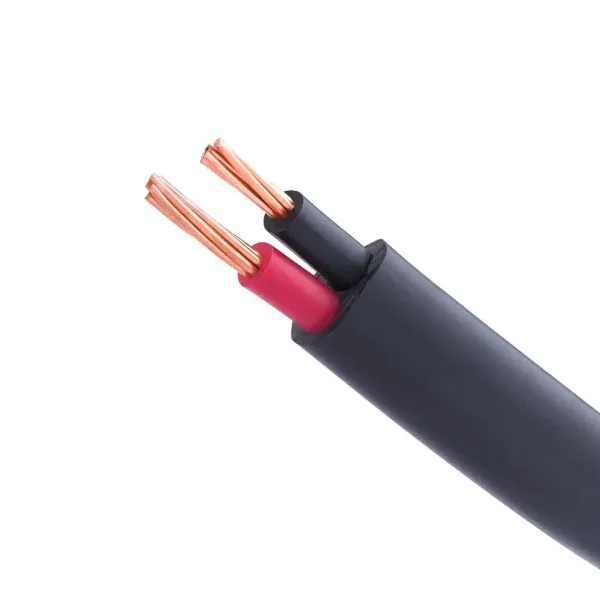
Multi-core copper cable for wiring that stays put. Class 2 conductors — fewer, thicker strands than flexible cable — for fixed runs in walls, conduit and trunking.
Fifteen products, drawn on the Pilone line in Lahore: 4, 6, 10, 16 and 25 mm², each in 2, 3 and 4 core. Submains, distribution boards and fixed panel wiring.
Core count follows the circuit. Size follows the load and the run length.
Two core carries line and neutral, with the earth arriving separately. Three core adds a dedicated earth for single-phase work. Four core carries three phases and a neutral on a 400 V supply, and because three conductors are loaded instead of two, the same copper is rated lower — 6mm² is 46 A as 2 or 3 core and 41 A as 4 core. Pick the core count first, then the size, then ask for the rate per meter.
Core count is settled by the conductors the circuit needs, not by the amps it carries: two core for line and neutral, three core for line, neutral and earth on single phase, four core for three phases and a neutral at 400 V. A core is a conductor. Only after the core count is fixed does the size matter.
| Core count | What it carries | Loaded conductors | Typical circuit |
|---|---|---|---|
| 2 core | Line and neutral | 2 | Single-phase runs where the earth arrives separately or through the conduit |
| 3 core | Line, neutral and earth — or three phases without a neutral | 2 | House submains, stoves, geysers, pumps; three-phase motor feeders |
| 4 core | Three phases and a neutral | 3 | 400 V feeders to sub-boards, risers, three-phase machines |
The catch is in the third column. A 4 core cable has three conductors carrying current, so it runs hotter for the same amps and BS 7671 rates it lower: 16mm² is 85 A as 2 core and 76 A as 4 core, off the same conductor. Buying 4 core "to be safe" on a single-phase job costs more copper and buys less current.
Fifteen products, all drawn from the same class 2 copper. Every one has its own spec sheet with the resistance, the ampacity, the voltage drop and the copper weight per coil.
Size follows the load, the run length, and how the cable is installed. Start with the calculator, or compare against flexible cable.
| Size (mm²) | Strands | R at 20°C (Ω/km) | Current, 2 loaded (A) | Current, 3 loaded (A) | Typical job |
|---|---|---|---|---|---|
| 4 | 7/0.85 | 4.61 | 36 | 32 | AC points, socket and lighting submains |
| 6 | 7/1.04 | 3.08 | 46 | 41 | House submains, stoves, geysers, pumps |
| 10 | 7/1.35 | 1.83 | 63 | 57 | Distribution board feeds and longer runs |
| 16 | 7/1.70 | 1.15 | 85 | 76 | Submain to a distribution board, meter tails |
| 25 | 7/2.14 | 0.727 | 112 | 96 | Main incomer and heavy three-phase submains |
Cable is priced off the copper inside it, at the day's rate. That is why a size list is also a price ladder: 25mm² 4 core holds twelve and a half times the copper of 4mm² 2 core, so it costs roughly twelve times as much per meter before anything else is counted. The table gives the conductor weight for every size and core count we make, which is also the check you can run on a delivered coil.
| Size | 2 core (kg/km) | 3 core (kg/km) | 4 core (kg/km) | Cu in a 90 m coil, 4 core |
|---|---|---|---|---|
| 4 mm² | 71 | 107 | 142 | 12.8 kg |
| 6 mm² | 107 | 160 | 213 | 19.2 kg |
| 10 mm² | 178 | 267 | 356 | 32.0 kg |
| 16 mm² | 284 | 427 | 569 | 51.2 kg |
| 25 mm² | 445 | 667 | 889 | 80.0 kg |
Then get the unit right, because this market quotes in three of them. One meter is 3.281 feet, so the same rate looks a third of the size when it is printed per foot. Coil is not a fixed quantity either: 30 m, 45 m and 90 m packs are all sold, some sellers quote 301 ft, which is 91.7 m, and 80-yard lengths exist. Get the length in meters in writing, divide the quote by it, and only then compare. The price per meter page works through the conversions, and the cable price list lays the sizes out side by side.
Cable prices track the daily copper rate, so we quote the factory price on the day, per meter. Send the size, core count, length in meters, and your city — Punjab in 1–2 days, the rest of Pakistan in 2–4.