
Factory-direct from Lahore · Nationwide delivery in 2–4 days
+92 319 4262451
WhatsApp
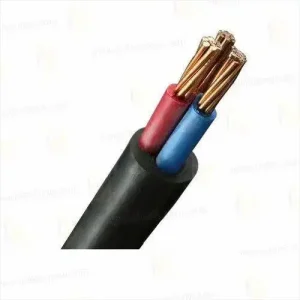
Three 10 mm² class 2 copper conductors, 7/1.35 mm strands per core, PVC insulated and sheathed to 450/750 V. 63 A as line-neutral-earth, 57 A as three phases, 1.83 Ω/km, about 24 kg of copper in a 90 m coil. Drawn on the Pilone line in Lahore.
Prices track the daily copper rate. Bulk and coil pricing on request.
Check the coil before you pay for it
Every coil leaves our factory with a QR code printed on the packaging. Scan it and the factory record for that batch opens: brand, cable size, batch number, year of manufacture and conductor. Compare the batch number on screen with the one printed on your coil — if the two do not match, it did not come from us.
10mm 3 core cable is quoted at the day's copper rate, per metre.
10 mm² 3 core standard cable is quoted at the day's copper rate, per metre — the rupee figure follows copper and is fixed on the day you order, so send the length in metres and your city on WhatsApp for today's number. What the rate buys has two current ratings, not one: as three phases with no neutral it carries 57 A on BS 7671 reference method C at 30°C, about 39 kVA at 400 V (1.732 × 400 × 57 ÷ 1000), and wired line-neutral-earth it has two loaded conductors and carries 63 A.
This size is quoted per metre, per foot, per coil, and often as a bare number with no unit at all.
The second thing to settle is the coil. “Coil” is a container, not a quantity — 90 m, 45 m and 30 m coils are all sold in Pakistan, and some shops still sell by the yard. Get the metre count in writing before you pay. The copper column is what should be inside each length.
| Quantity | Length | Copper inside it | To get the per-metre rate |
|---|---|---|---|
| 1 metre | 1 m | 0.27 kg | Nothing to do |
| 1 foot | 0.305 m | 0.08 kg | Multiply the per-foot rate by 3.281 |
| 45 m half coil | 45 m (148 ft) | 12.0 kg | Divide the coil price by 45 |
| 90 m coil | 90 m (295 ft) | 24.0 kg | Divide the coil price by 90 |
| 100 m drum | 100 m (328 ft) | 26.7 kg | Divide the drum price by 100 |
We quote per metre against the length you send us — ask for the 10 mm 3 core cable price with your metre count and your city and one number comes back. Search 25mm cable, or this size, or anything between, and the listings come back in three different units on one page, which is the whole problem. The cable price per meter page works through every conversion, and the cable price list sets the sizes side by side.
Tube wells, pump houses and workshop machines are what this size is bought for in Pakistan, and all three sit a long way from the board — which is why the run length matters here as much as the load. The rating itself depends on how many of the three conductors carry current. A protective earth does not, so a line-neutral-earth circuit is a two-loaded-conductor installation at 63 A, while three phases with no neutral — the usual arrangement on a motor — is three loaded conductors at 57 A.
| Wired as | Loaded conductors | Current capacity | Supply | 5% limit at full load |
|---|---|---|---|---|
| Line, neutral, earth | 2 | 63 A | 220 V | 40 m |
| Three phases, no neutral | 3 | 57 A | 400 V | 80 m |
So check the length before the load. A 30 A three-phase motor at 60 m drops 30 × 60 × 4.4 ÷ 1000 = 7.9 V, which is 2.0% of 400 V — inside the 20 V budget with room to spare. Loaded to its full 57 A the same cable spends that budget at 20,000 ÷ (57 × 4.4) = 80 m. Past that the run length picks the size, not the load.
| Size | Strands (class 2) | Line-neutral-earth, 220 V | Three phases, 400 V | Voltage drop | 5% limit at full load |
|---|---|---|---|---|---|
| 6 mm² | 7/1.04 | 46 A | 41 A | 7.3 mV/A/m | 33 m / 67 m |
| 10 mm² | 7/1.35 | 63 A | 57 A | 4.4 mV/A/m | 40 m / 80 m |
| 16 mm² | 7/1.70 | 85 A | 76 A | 2.8 mV/A/m | 46 m / 94 m |
| 25 mm² | 7/2.14 | 112 A | 96 A | 1.75 mV/A/m | 56 m / 119 m |
Step up or step down that ladder rather than guessing. 16 mm² buys 76 A on three phases against the 57 A here and pushes the drop limit out to 94 m; 25 mm cable buys 96 A and 119 m. On a long tube-well run it is usually the last column, not the amp column, that decides.
Both figures assume the cable is clipped direct in open air at 30°C. In conduit, bundled with other circuits, or in a hot pump house it carries less. BS 7671 handles that by multiplying the tabulated figure by correction factors for ambient temperature and grouping, and the factor depends on your installation, so we publish the tabulated number and the method rather than one invented figure. Work yours with the cable size calculator and the voltage drop calculator, then have a licensed electrician confirm it.
| Property | Value |
|---|---|
| Conductor | Plain annealed copper, class 2 stranded |
| Nominal area | 10 mm² × 3 cores |
| Strand construction | 7 / 1.35 mm per core (class 2, computes to 10.0 mm²) |
| Trade strand code | 7/.052 in — 9.6 mm² computed, sold as 10 mm² |
| Max conductor resistance at 20°C | 1.83 Ω/km |
| Current capacity (method C, 3 loaded) | 57 A |
| Current capacity (method C, 2 loaded) | 63 A |
| Three-phase capacity at 400 V | ≈ 39 kVA |
| Voltage drop | 4.4 mV/A/m |
| Voltage rating | 450/750 V |
| Insulation / sheath | PVC / PVC, 70°C conductor rating |
| Conductor copper weight | ≈ 267 kg/km (3 × 88.9 kg/km) |
| Copper in a 90 m coil | ≈ 24 kg (conductor only) |
| Reference standards | IEC 60228 (conductors), IEC 60227 (PVC cables) |
Fixed supply runs for pumps, compressors and small industrial motors up to the 57 A this cable carries.
Agricultural and water pump installations, where the run from the board is long and voltage drop decides the size.
Fixed wiring to lathes, compressors and shop machinery on a three-phase circuit.
Standard cable is fixed wiring: tray, trunking, conduit or clipped to a wall, indoors. If the run to the pump house goes underground — and on a tube well it usually does — use armoured cable instead, because the steel wire armour does the protecting, not the PVC sheath. Submersible sets have their own cable: see submersible pump cable. If the tail has to flex or be dragged, use the class 5 build, 10mm 3 core flexible cable.
Two choices sit behind every 10mm order. The first is construction. This page is the class 2 build: seven thick strands per core, meant to be pulled into place once and left there. The class 5 build, 10mm 3 core flexible cable, has 80 fine strands per core and bends without work-hardening — that is the one for machine tails and anything that moves.
The second is core count, and it follows the circuit rather than the load. The market writes it loosely — 3 core cable, 4core cable, three core — but all it ever means is how many conductors sit inside the sheath. Count the conductors the circuit carries end to end, earth included, and buy that many cores.
| Cores | What runs in it | Loaded | Current capacity |
|---|---|---|---|
| 2 core | Line and neutral, earth run separately | 2 | 63 A |
| 3 core | Line, neutral and earth — or three phases with no neutral | 2 or 3 | 63 A / 57 A |
| 4 core | Three phases plus neutral | 3 | 57 A |
The same size in the other two builds: 10mm 2 core standard cable and 10mm 4 core cable. One step up in the same three-core build is 16mm 3 core cable at 76 A on three phases; one step down is 6mm 3 core cable at 41 A. If the load needs a neutral as well as three phases, the four-core ladder beside it runs 6mm 4 core cable at 41 A, 16mm 4 core cable at 76 A and 25mm 4 core cable at 96 A. The aluminium equivalent at this size is 7/.052 10mm 2 core aluminium cable.
“Full gauge” is a claim on a lot of listings and it almost never comes with a test the buyer can run. Here are three you can run yourself, on any seller's cable including ours. You need a weighing scale, a tape and a vernier.
Conductor mass = area × cores × 8.89 kg/km per mm². For 10 mm² 3 core that is 10 × 3 × 8.89 = 267 kg/km, so a 90 m coil holds about 24 kg of copper before insulation and sheath.
Cut the end square. A 10 mm² class 2 core is 7 strands of about 1.35 mm. Fewer strands, or a thinner strand, means a smaller conductor whatever the sheath is printed with.
Get the metre count in writing before you pay, then check it with a measuring wheel. A short coil is the quietest way a per-coil price stops being the price you calculated.
“Excellent quality copper cables. Fast delivery across Pakistan. Highly recommended for electrical projects.”
“Best cable manufacturer in Lahore. 99.9% pure copper as promised. Very satisfied with the product quality.”
“Good quality cables at competitive prices. Delivery was quick to Karachi. Will order again.”