
Factory-direct from Lahore · Nationwide delivery in 2–4 days
+92 319 4262451
WhatsApp
A wire gets hot for one of two reasons: it is carrying more current than its size allows, or a joint in it has gone high-resistance.
The first is fixed by a larger conductor or a smaller load; the second by remaking one connection, and a new coil will not help it. Tell them apart by touching the run a metre away from the fitting — warm along the whole length means the size, cold there and hot only at the fitting means the joint. PVC cable is built around a 70 °C conductor, and nobody can read that temperature through the sheath by hand, so discoloured insulation, a smell of hot plastic, or a cable you cannot hold means switch the circuit off at the board now.
A copper PVC cable overheats when the current in it exceeds what its conductor area can shed as heat, or when a terminal develops enough resistance to burn power at that one point. On BS 7671 reference method C — clipped direct, 30 °C ambient — 1.5 mm² carries 19.5 A, 2.5 mm² carries 27 A and 4 mm² carries 36 A with two loaded conductors; pulled through conduit, bundled with other circuits, or sitting in a Lahore roof space in June, every one of those figures comes down. A cable running hot at a current below its tabulated rating is almost always a connection fault, not a conductor fault.
| What you see | Most likely cause | What to check | What fixes it |
|---|---|---|---|
| Whole run warm along its length under normal load | Current above the cable's derated capacity | Total the appliances on the circuit; read the MCB rating | A larger conductor, or take load off the circuit |
| Only the socket, switch or joint is hot; cable cold a metre away | High-resistance connection | Screw tightness, discoloured brass, strands left outside the clamp | Remake the termination; replace the accessory if the metal is burnt |
| Insulation discoloured, tacky, or smelling of hot plastic | The cable has run above its temperature rating for a long time | The whole length, for more discoloured stretches | Replace the run — cooked PVC does not recover |
| MCB trips after several minutes under load | Overload: real current above the breaker rating | What was added to that circuit since it last held | Split the load onto a second circuit, or step up cable and breaker together |
| Wire burned but the MCB never tripped | Current above the cable's capacity, below the breaker's | Breaker rating against the cable's derated capacity | Correct the pair — the MCB never above what the cable can carry |
| Aluminium replaced copper at the same size | Aluminium carries less at equal section | The size stamped on the new cable against the old | Step up the size; check the terminations as well |
| Hot only when the UPS or generator is feeding the house | One changeover output carrying what the grid split across several ways | Which circuits sit behind the changeover, and the total | Size the backup feed to the whole backup load |
The number that exists is the conductor rating: 70 °C for ordinary PVC building and power cable, and typically 90 °C for the XLPE and XLPO insulation used on solar DC cable. That is the temperature the copper inside is allowed to reach, not the temperature of the sheath you can touch. How much cooler the sheath runs depends on the insulation thickness, whether the cable is in conduit, and the air around it — so a hand on the outside does not measure it, and we will not tell anyone their cable is safe by feel.
What that leaves is a practical rule. A cable at its full rated current is warm by design, and warm on its own is not a fault. Four things are: heat you cannot keep your hand on, the smell of hot plastic, insulation that has gone brown or soft or tacky, and heat somewhere that was cool last year. Any of those, switch the circuit off and get it looked at before it is used again.
Wire kitna garam ho to normal hai? Thora garam hona normal hai. Boo aaye, rang badle, ya haath na tik sake — to circuit turant band karein aur licensed electrician ko dikhaein.
Half of the trouble here is that the shop and the standard speak different languages. You ask for a size in mm² and you are quoted a strand code — seven strands of 0.029 inch is 7/.029 — and the imperial codes do not land exactly on the metric nominal sizes. Charts circulating in Pakistan quote current ratings for these codes with no installation method behind them, usually higher than any standard supports. These are the BS 7671 figures with the method stated, so you can check them against any other chart you are shown.
| Trade code | Actual area | Sold as | 2 loaded cores | 3 loaded cores |
|---|---|---|---|---|
| 3/.029 | 1.29 mm² | 1.5 mm² | 19.5 A | 17.5 A |
| 7/.029 | 3.0 mm² | 2.5–3 mm² | 27 A | 24 A |
| 7/.036 | 4.6 mm² | 4 mm² | 36 A | 32 A |
| 7/.044 | 6.9 mm² | 6–7 mm² | 46 A | 41 A |
| 7/.052 | 9.6 mm² | 10 mm² | 63 A | 57 A |
| 7/.064 | 14.5 mm² | 16 mm² | 85 A | 76 A |
Read the two-core column for an ordinary single-phase circuit, where live and neutral are the only loaded conductors, and the three-core column for a three-phase run. Both are before derating. Which size to buy for a given appliance is a different question from why the existing one is hot — the AC circuit is worked through on cable for a 1.5 ton AC, and the cable size calculator sizes any load and run.
Take a pairing that turns up constantly: a 32 A MCB on 2.5 mm². The cable carries 27 A clipped direct at 30 °C. Pull 30 A through it and the cable is 3 A over its rating and heating, while the breaker sees 30 A on a 32 A device and holds all evening. Put the same cable in conduit alongside two other loaded circuits in a hot roof space and the 27 A comes down further, so the gap widens — and nothing in the panel knows.
The rule is one line: the MCB rating must never exceed the cable's capacity after derating. Before derating that gives 16 A on 1.5 mm², 25 A on 2.5 mm², 32 A on 4 mm², 40 A on 6 mm² and 63 A on 10 mm², and a step lower again where the run is buried, bundled or hot. So no, a bigger MCB is not the fix for repeated tripping. A breaker that trips under load is reporting the load; a larger one deletes the report and leaves the load exactly where it was. Where the cable is genuinely undersized, the choice between rewiring and shrinking the circuit is set out on wire size too small.
25 mm² aluminium carries 87 A with two loaded conductors on method C. 25 mm² copper carries 112 A on the same basis. Same number on the drum, 25 A less capacity — 25 ÷ 112 = 22% down. Swap one for the other size for size on a feeder that was already near its limit and the new cable runs hot at a load the old one carried without complaint. Aluminium earns its place on service drops and long feeders, and we draw it from 10 to 120 mm²; it just has to be sized as aluminium, not as the copper it replaced. The ratio at every size is on copper vs aluminium cable.
Aluminium also behaves differently at a screw terminal. It creeps under clamping pressure and moves more with heat than copper does, so a joint that was tight on installation day can loosen over years of warming and cooling — and a loose joint is a heater. This is why an aluminium run is more likely to give you a hot termination than a hot cable, and why those terminations want the right connector and a re-check rather than being made once and forgotten.
A short circuit is a direct low-resistance path between live and neutral, or live and earth. The current jumps far above anything the cable is rated for and the MCB's magnetic element clears it in milliseconds. That is not what is happening to a cable that gets slowly hot. Overheating is the failure the breaker does not see: a current the breaker is content with, and the cable is not.
The timing separates them. A trip the instant you switch something on is a short or a motor inrush. A trip after minutes under load is an overload. Keeping shorts out of an installation is a different job with different answers — mechanical protection, sound terminations, an RCD — and it is set out on how to prevent a short circuit.
Under-section coils and copper-clad aluminium are a real cause of hot cable here, and they are invisible once the wire is in the wall. The check that costs nothing is weight. Copper conductor weighs 8.89 kg per km for every mm² of section, so a 90 m coil of 2.5 mm² single core holds 22.2 × 0.09 = 2.00 kg of conductor copper. A coil actually drawn to the full 7/.029 section — 3.0 mm² — holds 3.0 × 8.89 × 0.09 = 2.40 kg.
| Sold as | Trade code | Conductor copper | Per 90 m coil |
|---|---|---|---|
| 1.5 mm² | 3/.029 | 13.3 kg/km | 1.20 kg |
| 2.5 mm² | 7/.029 | 22.2 kg/km | 2.00 kg |
| 4 mm² | 7/.036 | 35.6 kg/km | 3.20 kg |
| 6 mm² | 7/.044 | 53.3 kg/km | 4.80 kg |
| 10 mm² | 7/.052 | 88.9 kg/km | 8.00 kg |
Do not reach for a magnet. Copper-clad aluminium has an aluminium core and aluminium is not magnetic either, so the magnet test that circulates online cannot tell the two apart. What does tell them apart is stripping 30 mm and looking at a cut strand end — CCA shows a pale core inside a copper skin — and weight, which no coating can fake. Where the section itself is in doubt, we will check conductor size and resistance on a sample; that is a supplier's verification, not a certified independent test report, and we say so on that page. Our own position on the metal is on 100% copper wire.
This one catches people out because the same house on the same appliances behaves differently on backup. Two things change. The changeover output is a single cable carrying every circuit that was backed up, where the grid fed those circuits through separate ways in the board — so the current through that one run is the sum, not the largest. And loads that hold their power output — an inverter AC, a switch-mode charger, a motor driving a fixed load — draw more current as the voltage sags on a tired battery bank, so the amps rise exactly when the supply weakens.
Add a generator or inverter parked in a hot store or on a roof, and the ambient is above the 30 °C the tables assume, which lowers the capacity again. The arithmetic for sizing that feed is on load shedding backup wiring.
Isolate the circuit at the board before anything else. A cable that is discoloured or smells has already lost insulation life and is not going back into service as it is.
Heat that stops within a metre of a fitting is a termination fault. Heat spread along the whole run is a sizing fault. The two have different repairs and only one of them needs new cable.
Current from the appliance rating plates, length measured along the route the cable takes, and the installation method it will sit in. Then check the length as well as the load — on long runs voltage drop sets the size before heat does.
Not the size that was there, and not the size the last shop had in stock. Where the answer comes out at 4 mm² on a socket or AC circuit, that is 4mm 3 core standard cable with the earth at full size.
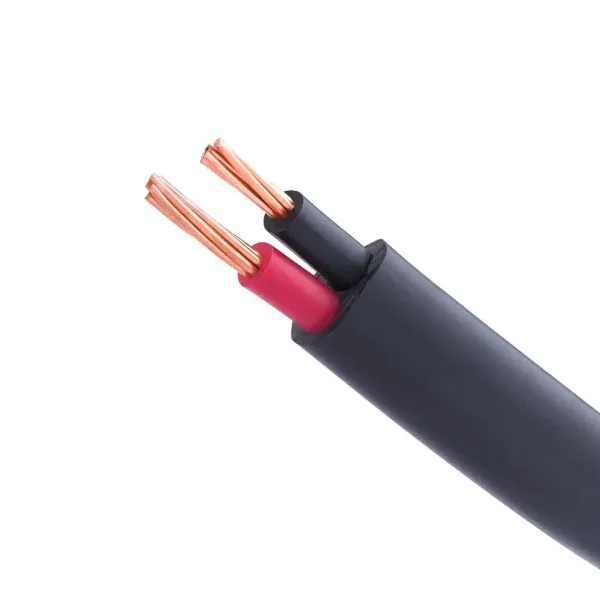
The usual answer where a 2.5 mm² circuit has outgrown itself. Class 2 stranded copper, 7/0.85, PVC insulated and sheathed to 450/750 V, rated 36 A clipped direct at 30 °C with two loaded conductors, drawn on the Pilone line in Lahore.
Cable is priced off the day's copper rate, so we quote per metre and per coil on WhatsApp rather than publish a figure that goes stale. Send the size, the metres and your city.
Other sizes in the same family: 6mm 3 core cable where the load has grown past 32 A, 10mm 2 core cable for a submain from the meter, and 4mm 3 core flexible cable where the tail has to bend.
We draw the copper in Lahore and sell it at the day's rate — no dealer margin, and the line that made the coil answers the message. Send the load, the run length and your city: Punjab in 1–2 days, rest of Pakistan in 2–4.