
Factory-direct from Lahore · Nationwide delivery in 2–4 days
+92 319 4262451
WhatsApp
1.5 mm² copper on a 10 A MCB, three cores so the body is earthed.
A desert cooler draws 200–500 W, which is 0.9–2.3 A on Pakistan's 220 V supply, and 1.5 mm² carries 19.5 A clipped direct at 30°C. Capacity is never the question on this appliance. The two things that are: the fan motor's surge at switch-on, which is why the breaker on this point is 10 A rather than 6 A, and the fact that this is a machine full of water standing in a window.
For a room cooler point in Pakistan, run 1.5 mm² copper on a 10 A MCB in three cores: the cooler draws 200–500 W, which is 200 ÷ 220 = 0.9 A to 500 ÷ 220 = 2.3 A, and 1.5 mm² is rated 19.5 A clipped direct at 30°C. The breaker is 10 A rather than 6 A because the fan and pump motors surge at switch-on, and the third core is not optional because the unit holds water and stands where people touch it wet.
| Cooler | Typical power | Running at 220 V | Start, 2–3× | Cable | MCB |
|---|---|---|---|---|---|
| Personal / small room | 150–250 W | 0.7–1.1 A | up to 3.3 A | 1.5 mm² | 10 A |
| Standard room cooler | 250–400 W | 1.1–1.8 A | up to 5.4 A | 1.5 mm² | 10 A |
| Large desert cooler with pump | 400–500 W | 1.8–2.3 A | up to 6.8 A | 1.5 mm² | 10 A |
Read the last row across: 2.3 A running, about 6.8 A for the moment the motor spins up. Put that against the breaker rather than against the cable. 6.8 ÷ 6 = 1.13, so on a 6 A device the surge sits barely over the rating; on a 10 A device it is 0.68 of it and the start is well clear. Where a cooler really does knock its breaker out at switch-on, the number that did it is the locked-rotor current on the plate, not this rule-of-thumb figure — read the plate before changing anything. The cable is untroubled by any of it: at 2.3 A over a 15 m run to a veranda, 1.5 mm² drops 29 × 2.3 × 15 ÷ 1000 = 1.00 V. Going up a cable size does nothing for the start surge; matching the breaker to the motor does.
This is the question load-shedding actually raises, and the cable is not the part that decides it. A 500 W cooler runs at 2.3 A, which a 1000 VA UPS covers easily on paper: 1000 ÷ 220 = 4.5 A of output. The start is what catches it. At two to three times running, the motor asks for about 6.8 A for a moment — half as much again as the unit is rated to give — and a small UPS answers that by alarming or dropping the load rather than by riding it out.
So size the backup on the surge, not on the running figure, and keep the cooler on the same 1.5 mm² point either way. The wiring each side of the inverter is a separate calculation, set out in the UPS and inverter cable size guide.
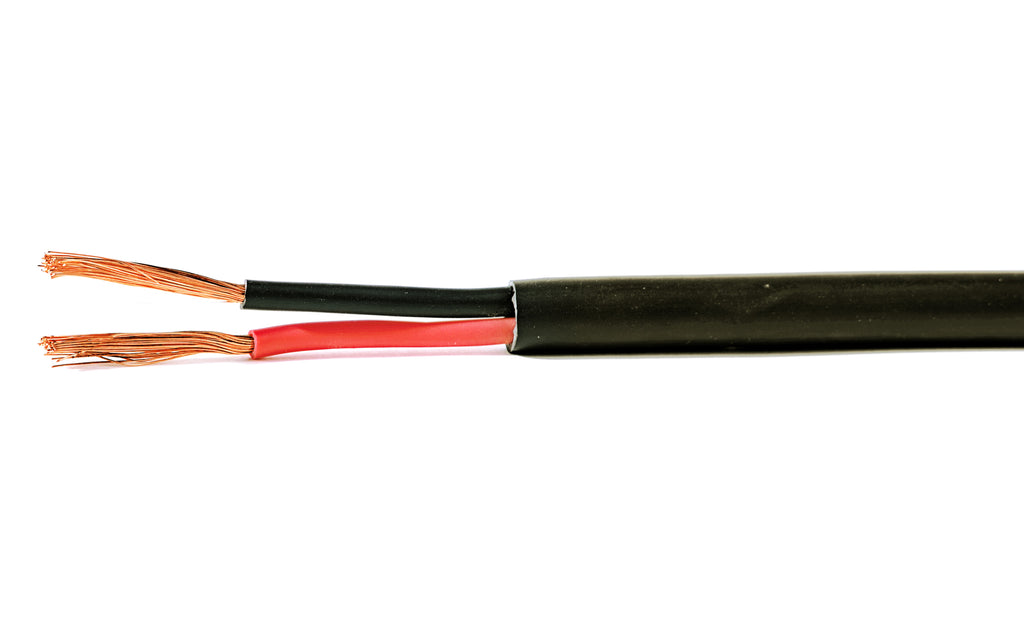
Class 5 stranded copper, 30/0.25, PVC insulated and sheathed, 300/500 V, drawn on the Pilone line in Lahore. Rated 19.5 A clipped direct at 30°C, 29 mV/A/m.
Cable is priced off the day's copper rate, so we quote per metre and per coil on WhatsApp rather than publish a figure that goes stale. Send the metres and your city.
For a cooler point take the three-core version, so the earth reaches the body: 1.5mm 3 core flexible cable. For a chased conduit run, 1.5mm single core solid cable pulled as separate conductors. All 1.5mm sizes and specs.
We draw the copper in Lahore and sell it at the day's rate — no dealer margin, and the line that made the coil answers the message. Tell us the metres and your city: Punjab in 1–2 days, rest of Pakistan in 2–4.