
Factory-direct from Lahore · Nationwide delivery in 2–4 days
+92 319 4262451
WhatsApp
Worktop sockets on 2.5 mm² — the wire the shop calls 7/.029 — on their own 16 A MCB. Lights and the exhaust fan on 1.5 mm² (3/.029) on 6 A. Anything over about 3 kW — and every AC point, whatever its wattage — gets its own 4 mm² (7/.036) circuit.
The kitchen is the only room where three or four heating appliances can switch on in the same minute, so it is sized as its own circuit group rather than as part of the house socket ring, and the whole group sits behind a 30 mA RCD — it is a wet-hand room with earthed metal in it.
In a Pakistani kitchen on a 220 V single-phase supply, 2.5 mm² copper carries the general worktop socket circuit at 16 A, 1.5 mm² carries lighting and the exhaust fan at 6 A, and any single appliance that draws more than about 3 kW — a full-size electric oven, an instant geyser, a kitchen AC — is taken back to the distribution board on its own 4 mm² circuit rather than spurred off the sockets. That holds for a run in conduit at normal wall lengths; past about 20 m the socket circuit is decided by voltage drop instead, which is worked out further down.
| Kitchen point | Typical load | Cable (strand code) | Capacity | MCB |
|---|---|---|---|---|
| Ceiling and under-cabinet lights | 10–100 W each | 1.5 mm² (3/.029) | 19.5 A | 6 A |
| Exhaust fan, chimney hood | 30–250 W | 1.5 mm² (3/.029) | 19.5 A | 6 A |
| Worktop sockets (kettle, microwave, toaster) | 700–2000 W each | 2.5 mm² (7/.029) | 27 A | 16 A |
| Refrigerator socket | 100–250 W running | 2.5 mm² (7/.029) | 27 A | 16 A |
| Washing machine point | 500–2000 W | 2.5 mm² (7/.029) | 27 A | 16 A |
| Electric oven up to 3 kW | 2000–3000 W | 2.5 mm² (7/.029) | 27 A | 16 A, dedicated |
| Oven and hob together, or over 3 kW | 3000–5000 W | 4 mm² (7/.036) | 36 A | 20 A, dedicated |
| Instant geyser at the sink | 3000–4500 W | 4 mm² (7/.036) | 36 A | 25 A, dedicated |
| Kitchen AC point | 1500–1800 W | 4 mm² (7/.036) | 36 A | 20 A, dedicated |
| Earth conductor to the kitchen | — | 6 mm² (7/.044) | 46 A | — |
The single-core wire for those rows is what we draw: 3/.029 single core copper cable for the lights, 7/.029 single core copper cable for the sockets, 4mm single core copper cable for the dedicated circuits and 6mm single core copper cable for the earth.
A kitchen is not a heavy room on paper. It is a heavy room for ninety seconds at a time, and that is what trips breakers. Take three ordinary appliances on the same worktop, at the top of their typical bands: an electric kettle at 2000 W, a microwave at 1200 W and a toaster at 800 W.
4000 W ÷ 220 V = 18.2 A. The 2.5 mm² cable is fine — it is rated 27 A, and even if the correction factors for conduit, bunching and a Lahore summer multiply out to 0.75 it still carries 27 × 0.75 = 20.3 A. The 16 A MCB is what gives up. That is the correct outcome, not a fault: the breaker is protecting a cable that is doing its job.
So a kitchen with a real appliance load gets two socket circuits, worktop split left and right, rather than one bigger cable. Two 16 A circuits on 2.5 mm² beat one 32 A circuit on 6 mm², because a tripped kettle does not take the fridge down with it. Keep the fridge on the circuit that has nothing else switching on it.
Heat sets the size on short runs, length sets it on long ones. 2.5 mm² drops 18 mV per amp per metre. Hold the whole installation to 3% of 220 V — 6.6 V — and give a final circuit about half of that, 3.3 V, because the run from the meter to the board has already spent the rest.
At the full 16 A the sum is 3.3 ÷ (18 × 16 ÷ 1000) = 11.5 m, which sounds alarming until you notice that a kitchen almost never sits at 16 A. At a realistic steady 8 A the same circuit reaches 3.3 ÷ (18 × 8 ÷ 1000) = 23 m. Between those two numbers is the honest answer: measure the route from the distribution board to the far socket, and if it is over about 20 m take the socket circuit up to 4 mm², which drops 11 mV/A/m instead of 18. Your own length goes into the voltage drop calculator.
Thirteen points is a full kitchen: three lights, an exhaust fan, six worktop and appliance sockets, a fridge socket, an oven point and an instant geyser point. Multiply points by the average run back to the board, then by the number of conductors each run carries.
13 in the kitchen above. Count yours off the approved layout — a kitchen with a hob, a hood and a dishwasher runs to 16.
12 m per point: the share of the circuit run back to the board, plus the ceiling rise and the switch drop.
2.5 per lighting run, where switch legs share a neutral; 3 per socket and appliance run, which each carry live, neutral and earth.
Lights and exhaust: 4 × 12 × 2.5 = 120 m of 1.5 mm². Sockets and fridge: 7 × 12 × 3 = 252 m of 2.5 mm². Oven and geyser: 2 × 12 × 3 = 72 m of 4 mm². Add 15% for cutting waste and failed pulls and it is 138 m, 290 m and 83 m — at 90 m to a coil, 2 coils, 4 coils and 1 coil. That is one room's share of a house list, not an addition to it; the whole-house method is on how much cable a house needs and a worked plot total is on 5 marla house wiring.
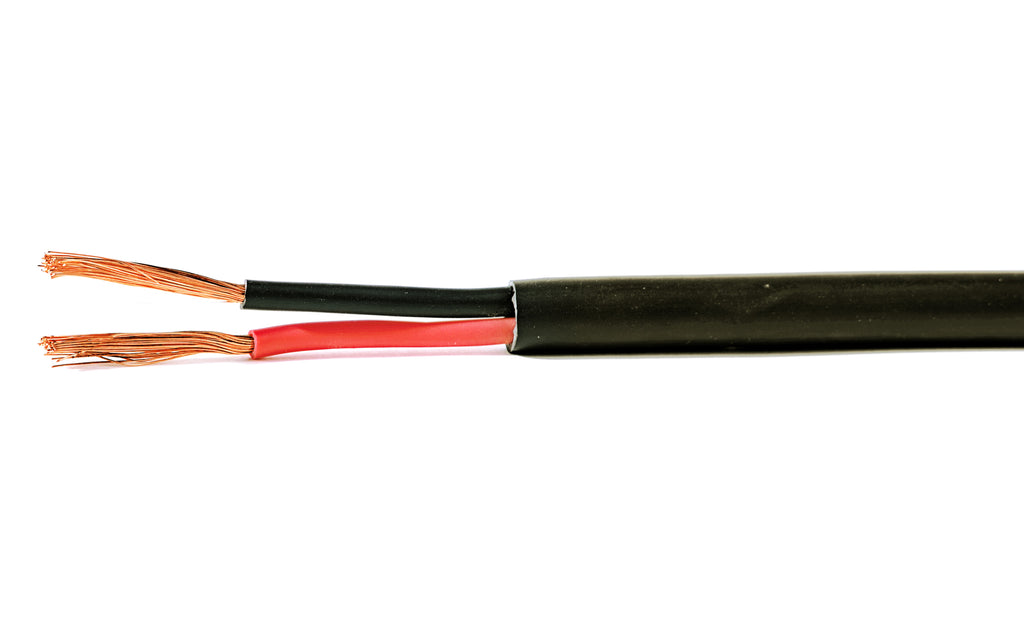
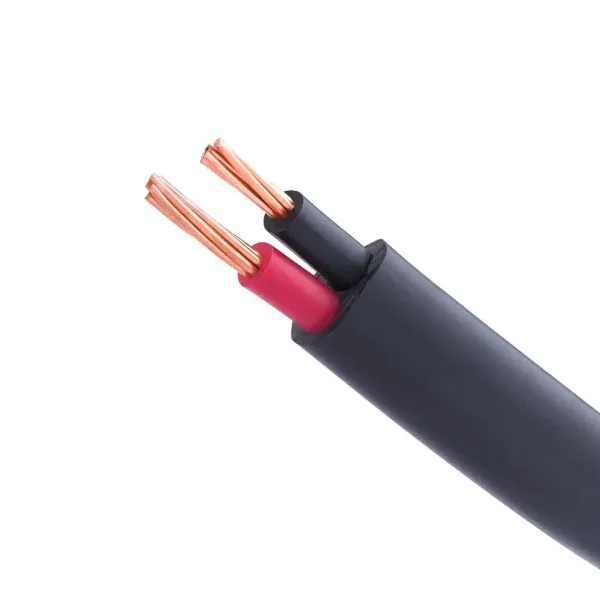
The sheathed sizes above suit an appliance tail and a surface run. Wiring in conduit is pulled as single core: 7/.029 copper cable price for the sockets, 3/.029 copper cable for the lights, and 4mm 3 core standard cable where the oven or geyser point needs its own earthed run.
We draw the copper in Lahore and sell it at the day's rate — no dealer margin. Send the coil list and your city for today's number: Punjab in 1–2 days, rest of Pakistan in 2–4.